Table of Contents
What Is Remote Work?
A remote job allows employees to complete their work outside a traditional office. Instead of commuting every day, remote workers use internet-connected devices to communicate with colleagues, complete assignments, attend meetings, and collaborate on projects.
Remote work became significantly more common over the past few years, but it is no longer just a temporary trend. Companies of all sizes now hire talented professionals regardless of where they live. Many organizations have discovered that remote teams can remain productive while reducing office costs and expanding access to skilled workers worldwide.
Remote jobs exist across many industries, including customer support, software development, digital marketing, accounting, graphic design, writing, education, project management, healthcare administration, and sales.
Quick Tip
A legitimate remote job is simply a regular job performed online. Employers still expect professionalism, reliability, communication, and quality work.
Benefits of Working Remotely
Remote work offers advantages for both employees and employers. While every role is different, many professionals appreciate the flexibility and freedom that remote careers provide.
1. Better Work-Life Balance
Without daily commuting, many remote workers gain additional personal time that can be used for family responsibilities, exercise, education, or hobbies.
2. Access to More Job Opportunities
Instead of limiting yourself to employers within commuting distance, remote work allows you to apply for positions offered by companies across different cities and countries.
3. Lower Daily Expenses
Many employees spend less on transportation, meals, and office clothing when working from home.
4. Increased Productivity
Many people find they can focus better in a quiet home office with fewer workplace distractions.
Remember
Remote work isn't easier than office work—it simply requires different habits. Strong communication, organization, and time management become even more important when working independently.
Popular Types of Legitimate Remote Jobs
Remote work opportunities continue expanding across nearly every industry. Some positions require advanced experience, while others welcome beginners willing to learn.
| Job Role | Experience Needed | Communication Level |
|---|---|---|
| Customer Support Representative | Beginner | High |
| Virtual Assistant | Beginner | High |
| Content Writer | Beginner–Intermediate | Medium |
| Graphic Designer | Intermediate | Medium |
| Software Developer | Advanced | Medium |
| Digital Marketing Specialist | Intermediate | High |
| Bookkeeper | Intermediate | Low |
Rather than choosing a job solely because it is remote, consider your existing skills, interests, and long-term career goals. Building expertise in one field often leads to better opportunities than constantly switching between unrelated jobs.
Essential Skills Employers Look for in Remote Workers
Working remotely requires more than technical knowledge. Since managers cannot supervise employees in person, they value professionals who are reliable, organized, and able to communicate clearly. Even if you are applying for an entry-level role, demonstrating these skills can make your application stand out.
1. Communication Skills
Most remote teams collaborate through email, Slack, Microsoft Teams, Zoom, or Google Meet. Employers want people who can write clear messages, ask thoughtful questions, and provide regular progress updates without constant supervision.
Practical Example
Instead of saying "I'm working on it," send an update like:
- Completed homepage design.
- Working on mobile responsiveness.
- Expect to finish tomorrow afternoon.
Clear updates build trust with your manager and reduce unnecessary follow-up questions.
2. Time Management
Remote employees often have flexible schedules, but deadlines remain important. Employers prefer candidates who can prioritize tasks, manage distractions, and consistently deliver work on time.
3. Self-Motivation
Successful remote workers take initiative. Instead of waiting for constant instructions, they solve problems independently, ask for clarification when needed, and actively look for ways to improve.
4. Digital Literacy
Most remote jobs require basic computer skills, including using cloud storage, online documents, spreadsheets, calendars, and communication software.
5. Problem-Solving Ability
Unexpected issues happen in every job. Employers appreciate candidates who remain calm, analyze the situation, and propose practical solutions instead of simply reporting problems.
Remote Worker Skills Checklist
- ✓ Professional written communication
- ✓ Time management
- ✓ Reliability
- ✓ Organization
- ✓ Basic computer skills
- ✓ Video meeting confidence
- ✓ Ability to work independently
- ✓ Continuous learning mindset
Where to Find Legitimate Remote Jobs
Finding trustworthy remote jobs starts with using reputable platforms. While thousands of job listings appear online every day, not all are genuine. Focus on established job boards and company career pages to reduce the risk of scams.
1. Company Career Pages
Many companies advertise vacancies only on their own websites before posting them elsewhere. If there is a company you admire, regularly check its Careers page and sign up for job alerts when available.
2. Remote-Focused Job Boards
Several job boards specialize in remote opportunities across different industries. These platforms often include filters for experience level, location, salary, and employment type.
3. LinkedIn Jobs
LinkedIn allows you to search specifically for remote positions, follow companies, connect with recruiters, and showcase your professional experience in one place.
4. Industry-Specific Job Boards
Many professions have dedicated job boards. For example, developers, designers, marketers, writers, and educators often have niche communities where remote positions are advertised.
Quality Over Quantity
Instead of submitting hundreds of identical applications, spend more time tailoring fewer applications. Personalized resumes and cover letters often receive better responses than mass applications.
Signs a Job Listing Is Legitimate
- Provides a detailed job description.
- Lists clear responsibilities.
- Explains required qualifications.
- Uses a professional company email.
- Links to an official company website.
- Does not ask for upfront payments.
- Includes a structured interview process.
Create a Resume That Appeals to Remote Employers
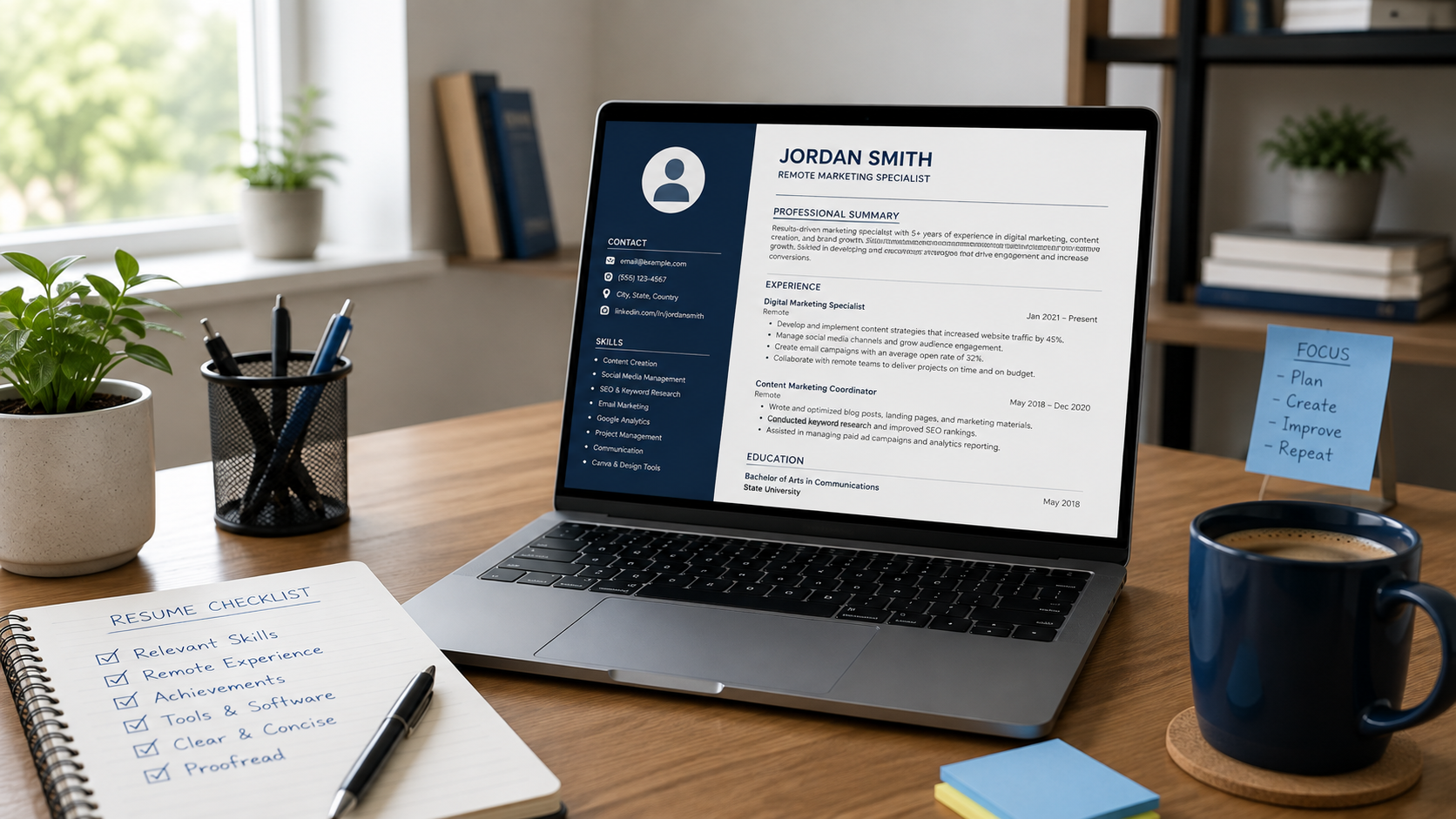
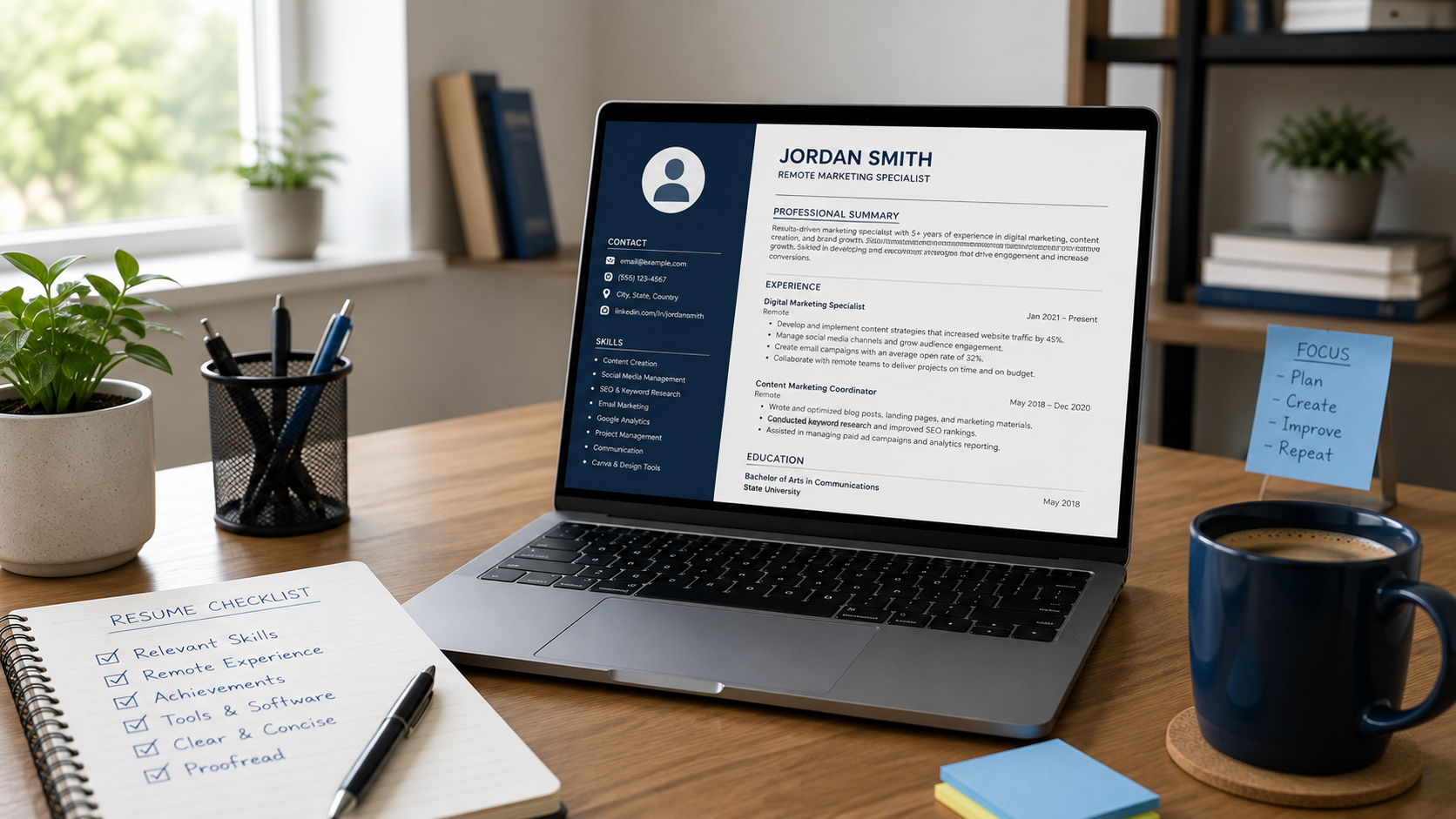
Your resume should clearly demonstrate that you can work effectively without constant supervision. Employers often review resumes in less than a minute, so clarity and relevance are essential.
Keep Your Resume Easy to Read
Use simple formatting with consistent headings, bullet points, and plenty of white space. Avoid unnecessary graphics that may confuse applicant tracking systems (ATS).
Highlight Relevant Skills
If you've used collaboration tools such as Google Workspace, Microsoft Office, Zoom, Slack, Notion, or Trello, include them in your skills section where relevant.
Show Measurable Achievements
Rather than listing duties, explain what you accomplished.
Weak Example
Responsible for customer service.
Better Example
Resolved customer inquiries while maintaining high satisfaction ratings and meeting daily response targets.
Include Transferable Experience
If you have never worked remotely before, highlight experiences that demonstrate organization, communication, leadership, or independent work. Volunteer work, internships, university projects, and freelance assignments can all strengthen your application.
Resume Checklist
- ✓ One or two pages maximum
- ✓ No spelling mistakes
- ✓ Professional email address
- ✓ Updated contact information
- ✓ Relevant work experience
- ✓ Skills matched to the job description
- ✓ Clear achievements instead of responsibilities
- ✓ Easy-to-read formatting
Optimize Your LinkedIn Profile for Remote Opportunities
Many recruiters search LinkedIn before contacting candidates. A complete and professional profile increases your chances of appearing in recruiter searches.
Use a Professional Photo
Choose a clear, well-lit headshot with a simple background. Dress appropriately for your industry and smile naturally.
Write a Strong Headline
Instead of listing only your current position, describe the value you provide.
Example
Customer Support Specialist | Experienced in Email Support, Live Chat & CRM Systems
Complete Your About Section
Write a concise summary explaining your experience, strengths, career goals, and the types of remote roles you're seeking.
Request Recommendations
Positive recommendations from previous employers, colleagues, instructors, or clients increase your credibility and help employers understand your working style.
Even if you're just starting your career, recommendations from internships, volunteer projects, or freelance work can demonstrate professionalism and reliability.
Pro Tip
Customize your LinkedIn URL so it looks professional when included on your resume. Example: yourname instead of yourname-4b93f6d87
How to Apply for Remote Jobs Successfully
Many qualified candidates never receive interview invitations because they submit generic applications to every job they find. Remote employers often receive hundreds of applications for a single opening, so taking the time to personalize your application can significantly improve your chances.
Read the Job Description Carefully
Before applying, read the entire job description and identify the key skills, qualifications, and responsibilities the employer is looking for. Your resume and cover letter should reflect those requirements whenever they genuinely match your experience.
Pro Tip
Many companies use Applicant Tracking Systems (ATS) to filter resumes before a hiring manager reviews them. Including relevant keywords naturally from the job description can improve your chances of passing the initial screening.
Customize Every Application
Avoid sending the same resume and cover letter to every employer. Instead, adjust your professional summary, skills, and achievements to highlight your most relevant experience for each role.
Follow Application Instructions
Some employers ask applicants to include specific information in their application, such as answering questions, attaching a portfolio, or including a keyword in the email subject. Missing these instructions may result in automatic rejection.
How to Write a Cover Letter That Gets Attention
A strong cover letter explains why you're interested in the company and how your skills can help solve their problems. Keep it concise, professional, and focused on the employer's needs rather than simply repeating your resume.
Recommended Structure
- Professional greeting
- Brief introduction
- Relevant skills and achievements
- Why you're interested in the company
- Professional closing statement
Avoid These Mistakes
- Using the same cover letter for every employer.
- Writing more than one page.
- Discussing salary too early.
- Including irrelevant personal information.
- Repeating your resume word for word.
Create a Portfolio Even If You're a Beginner
Many entry-level candidates believe they need years of experience before creating a portfolio. In reality, employers often value proof of your skills more than years of employment.

What Can You Include?
- Personal projects
- Volunteer work
- Practice assignments
- Case studies
- Writing samples
- Graphic designs
- Coding projects
- Marketing campaigns
If you're applying for customer support roles, include examples of professional emails you've written. If you're interested in graphic design, showcase sample logos, social media posts, or website mockups.
How to Prepare for a Remote Job Interview
Remote interviews are often conducted through Zoom, Microsoft Teams, or Google Meet. Preparing your environment is just as important as preparing your answers.

Test Your Equipment
- Internet connection
- Microphone
- Camera
- Lighting
- Headphones
Choose a Professional Background
Find a quiet, clean, and well-lit location. Remove distractions and avoid noisy environments whenever possible.
Interview Preparation Checklist
- ✓ Resume ready
- ✓ Company researched
- ✓ Internet tested
- ✓ Camera working
- ✓ Quiet environment
- ✓ Professional clothing
- ✓ Notebook and pen nearby
- ✓ Phone on silent mode
Common Remote Interview Questions
Although every interview is different, many employers ask similar questions to evaluate your communication skills, work ethic, and ability to work independently.
| Question | What the Employer Wants |
|---|---|
| Tell me about yourself. | Professional summary and communication skills. |
| Why do you want this role? | Interest in the company and position. |
| Describe a challenge you solved. | Problem-solving ability. |
| How do you stay organized? | Time management skills. |
| How do you communicate remotely? | Communication and collaboration skills. |
| Why should we hire you? | Confidence and value proposition. |
Follow Up After Your Interview
Sending a brief thank-you email within 24 hours demonstrates professionalism and appreciation. It also gives you another opportunity to express your interest in the position.
Example
Thank you for taking the time to speak with me today. I enjoyed learning more about your team and the role. Our conversation strengthened my interest in joining your company, and I appreciate the opportunity to be considered.
If you don't receive a response after the hiring timeline has passed, sending one polite follow-up email is appropriate. Avoid repeatedly contacting recruiters, as this may create a negative impression.
How to Avoid Remote Job Scams
Remote work has created excellent career opportunities, but unfortunately, it has also attracted scammers looking to exploit job seekers. Learning how to identify warning signs can help you protect your personal information, finances, and professional reputation.

Legitimate employers invest time in recruiting qualified candidates. Scammers, on the other hand, often try to rush applicants into making decisions before they have enough information.
Common Warning Signs
- The company asks you to pay money before starting work.
- You are promised extremely high earnings for little or no experience.
- The interviewer avoids video calls or refuses to answer basic questions.
- The company has no professional website or online presence.
- The job description is vague or poorly written.
- You receive an offer immediately without an interview.
- The recruiter asks for sensitive information such as banking passwords or identity documents too early.
Remember
A legitimate employer may request identity documents after you've accepted an offer and as part of official onboarding—but reputable companies will not ask for passwords, PINs, or upfront payments.
How to Verify a Remote Employer
Before accepting any remote position, spend a few minutes researching the company. A little investigation can prevent significant problems later.
Research Checklist
- Visit the company's official website.
- Review its LinkedIn profile and recent activity.
- Read employee reviews from multiple sources.
- Look for a physical business address and contact details.
- Check whether the recruiter uses a company email address.
- Search for recent news about the business.
If something feels suspicious, continue researching before sharing personal information or signing any agreements.
How to Build a Long-Term Remote Career
Getting your first remote job is only the beginning. Long-term success comes from consistently improving your skills, maintaining strong relationships with colleagues, and adapting to changes in your industry.
Keep Learning
Technology and workplace practices evolve quickly. Regularly learning new software, communication techniques, and industry skills helps you remain competitive.
Build Your Professional Network
Connect with colleagues, recruiters, and professionals in your field through networking events, online communities, and professional platforms. Strong relationships often lead to future job opportunities.
Maintain Work-Life Balance
Remote work offers flexibility, but maintaining boundaries is important. Set regular working hours, take breaks, and create a dedicated workspace whenever possible.
Habits of Successful Remote Professionals
- ✓ Meet deadlines consistently.
- ✓ Communicate proactively.
- ✓ Continue learning new skills.
- ✓ Stay organized.
- ✓ Keep your workspace professional.
- ✓ Accept constructive feedback.
- ✓ Build meaningful professional relationships.
- ✓ Maintain a healthy work-life balance.
Frequently Asked Questions
Can beginners get remote jobs?
Yes. Many companies hire entry-level candidates for customer support, virtual assistance, data entry, content writing, and administrative positions. Focus on developing relevant skills and tailoring your applications.
Do remote jobs always require experience?
No. Some positions require previous experience, while others provide training. Reading each job description carefully will help you understand the employer's expectations.
What equipment do I need?
Most remote jobs require a reliable computer, stable internet connection, webcam, microphone, and a quiet workspace.
Are remote jobs available worldwide?
Many companies hire internationally, while others restrict hiring to specific countries because of legal, tax, or time-zone requirements. Always review the job listing before applying.
Should I pay for remote job opportunities?
Be cautious. Legitimate employers generally do not charge applicants simply to apply for or receive a job offer.
Key Takeaways
- Remote jobs exist across many industries and experience levels.
- Strong communication and time-management skills are essential.
- Customize every resume and cover letter.
- Prepare carefully for virtual interviews.
- Research employers before accepting offers.
- Continue improving your skills throughout your career.
Final Thoughts
Remote work has become a permanent part of today's employment landscape, offering opportunities for professionals at every stage of their careers. While competition can be strong, candidates who develop relevant skills, prepare thoughtful applications, and approach their job search strategically are more likely to succeed.
Treat your remote job search as a long-term investment. Continue learning, refine your professional profile, and focus on building genuine experience rather than chasing unrealistic promises. With patience and persistence, you can build a rewarding remote career that supports both your professional goals and personal lifestyle.